
Tarlena Almanac
Issue No. 01 — 2026 London

Watching
the Rhythm
of Daily Meals.

An independent editorial record of eating pace, convenience food patterns, and the overlooked architecture of the everyday mealtime in modern Britain.

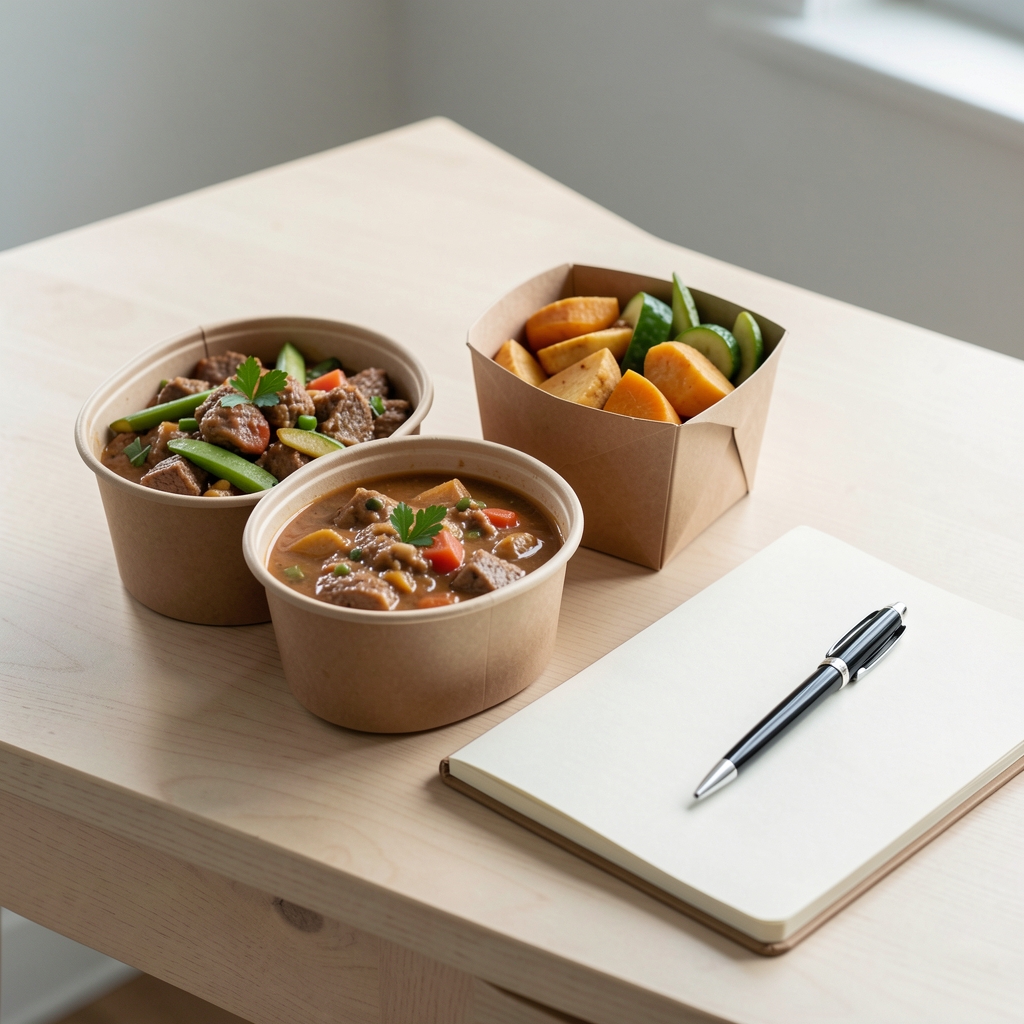
Takeaway food containers arranged on a pale wooden desk beside a notepad and pen, editorial still life composition in natural light
Field observation, London 2026
Eating Pace · Portion Awareness · Hurried Meals · Distracted Eating · Convenience Food · Meal Environment · Food Rhythm · Modern Appetite · Eating Pace · Portion Awareness · Hurried Meals · Distracted Eating · Convenience Food · Meal Environment · Food Rhythm · Modern Appetite ·
01 — Archive
TA

A record of eating patterns in an age of speed.

Tarlena Almanac was founded on a single observation: that the conditions in which people eat — their pace, their attention, their surroundings — shape what and how much they consume, often more than the food itself.

Each piece in this archive examines a different facet of everyday eating behaviour: the hurried lunch, the screen-accompanied dinner, the ready-made meal consumed without ceremony. The journal does not recommend. It observes, records, and considers.

03 — Observations
7m
Average UK desk lunch duration, 2025 survey
3×
Greater intake observed during screen-accompanied eating sessions
62%
UK workers reporting lunch eaten at workstation most days
20m
Approximate delay before appetite signals register after eating

Figures drawn from published dietary research literature and independent observation. Presented for editorial context — not as precise data claims.

04 — Perspective
"There is a quiet difference between eating and nourishing — and pace is often where that difference lives."
— Eleanor Marsden, founding editor, Tarlena Almanac
05 — Standards

How this publication works

Full methodology →
Observation First

Every article begins with a documented observation: a place, a pattern, a habit noticed in the field. We do not start from conclusions.

Evidence-Informed

Where published nutritional research supports a claim, we cite it. Where the evidence is incomplete, we say so plainly.

Second-Editor Review

Every piece is reviewed by a second editor before publication. Corrections are noted publicly when required.

No Prescriptions

This publication does not advise, direct, or recommend. It presents observations and lets the reader draw their own conclusions.

06 — Questions

Common questions about eating habits and pace

Eating pace refers to the rate at which a person moves through a meal — how quickly bites are taken, how long is spent chewing, how much time elapses between courses. Research into food behaviour suggests that eating pace is associated with how satisfied a person feels by the end of a meal, and with how much they consume overall.

When attention is directed at a screen during a meal, awareness of the meal itself — its taste, its volume, its progression — tends to diminish. Published food behaviour research suggests this divided attention is associated with a reduced sense of fullness after eating, and may contribute to greater overall intake in subsequent meals as well.

Convenience food choices are not categorically linked to overeating patterns. What matters more is the context in which they are consumed: at pace, without attention, under time pressure, or in an environment that does not support a considered meal. The same food eaten slowly and attentively may produce a different eating experience than the same food consumed in thirty seconds between tasks.

In plain editorial terms, mindful eating pace simply means slowing down enough to notice what is being eaten. This is not a formal practice or a directed routine — it is an orientation of attention. Research into food behaviour suggests that people who eat more slowly and with greater awareness report a more satisfying eating experience and show greater portion awareness over time.

The physical and social context of a meal — its setting, its noise level, the presence of others, the available time — has been studied as a significant factor in eating behaviour. A noisy, pressured environment tends to be associated with faster eating. A quieter, more settled environment tends to support a more measured eating rhythm. These are observations from published food environment research, not prescriptions.

Tarlena Almanac is an editorial publication, not a guidance resource. The content here reflects the writers' observations and engagement with published research. We recommend speaking with a qualified wellness or nutrition professional before introducing any new habit or routine to your daily life, particularly if you have specific dietary requirements.

Editorial portrait of a woman seated at a desk with notebooks and a cup of tea, soft natural window light from the left
Eleanor Marsden, founding editor
07 — About

A publication born from a notebook and a long train journey.

Tarlena Almanac began as a personal journal of meal observations kept during a year of heavy commuting. The patterns that emerged — rushed breakfasts, desk lunches, screen-lit dinners — suggested a story worth telling in public.

The almanac format was chosen deliberately: a periodic record, attentive to season and circumstance, never claiming to be more than a careful set of notes on how Britain eats.

Meet the editorial team