Eating Pace
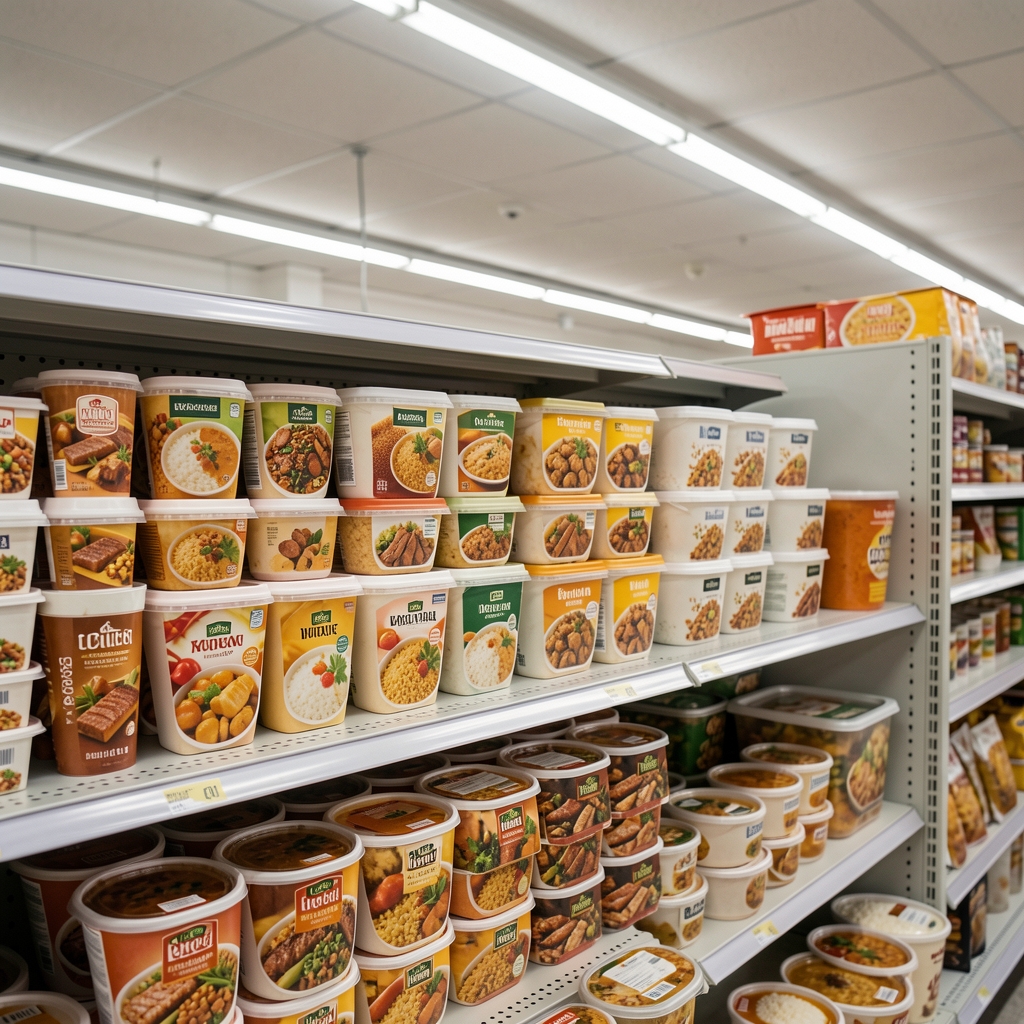
Stand in the ready-made aisle of any central London supermarket between half past five and seven on a weekday evening, and you are standing inside one of the most revealing archives of contemporary eating habits that Britain has produced.
The people who pass through it are not, for the most part, people who prefer ready-made meals to home-cooked ones. They are people whose relationship with the available time of their evening has been shaped to a point at which the preparation of a meal from basic components has become, on most weeknights, an unrealistic proposition. The ready-made aisle serves a need that is less about appetite than about time, and the decisions made within it — what gets selected, how quickly, with what level of scrutiny — carry information about the everyday eating habits of a significant portion of the British population.
This piece records observations made during a week spent in three central London supermarkets during the evening rush, supplemented by engagement with published food behaviour research on pre-portioned meals and their relationship to appetite and satiety. The observations are editorial rather than rigorous: they are notes from a particular vantage point, not a controlled study.
When a person cooks from basic ingredients, the portion decision takes place in real time. They look at the pasta, the rice, the vegetables, and they make an ongoing series of judgements about quantity — shaped by how hungry they feel, by who else is eating, by what they have in the kitchen. This is an imperfect and often imprecise process, but it is a process in which appetite plays at least some role.
When a person selects a ready-made meal from a supermarket shelf, the portion decision has already been made — by the food manufacturer, guided by production conventions, labelling regulations, market research, and commercial considerations. The individual stands in the aisle not selecting a quantity but selecting a unit. The unit's size is fixed. The only real decision remaining is whether to buy one or two.
Published food behaviour research has noted this displacement of the portion decision as one of the structurally distinctive features of ready-made meal consumption. The appetite and food choices research literature suggests that individuals eating from pre-portioned units are less likely to adjust their consumption mid-meal in response to satiety signals than those whose food is self-served. The unit creates an implicit instruction: this is what one serving is. That instruction, absorbed without conscious deliberation, shapes the meal.
"The unit of a ready-made meal is not a nutritional guideline. It is a commercial decision that has quietly become a personal one."
One of the most striking observations from the week of field notes was the speed with which ready-meal selections were made. Shoppers who had spent significant time in other aisles — scrutinising labels on yoghurts, comparing prices on cheese, reading the back of cereal boxes — moved through the ready-meal section with markedly less deliberation. The average time spent selecting a ready meal, across the observed sessions, was under forty seconds. The average time spent selecting a fresh vegetable in the adjacent aisle was closer to two minutes.
This contrast is not surprising — the vegetable purchase involves a degree of preparation planning that a ready meal bypasses — but it is telling. The ready-meal selection is a resolution of a problem rather than a decision about food. The question being answered in the aisle is not "what do I want to eat" or "how much do I need" but "how do I close the gap between where I am and a meal on the table with the minimum expenditure of further time and energy."
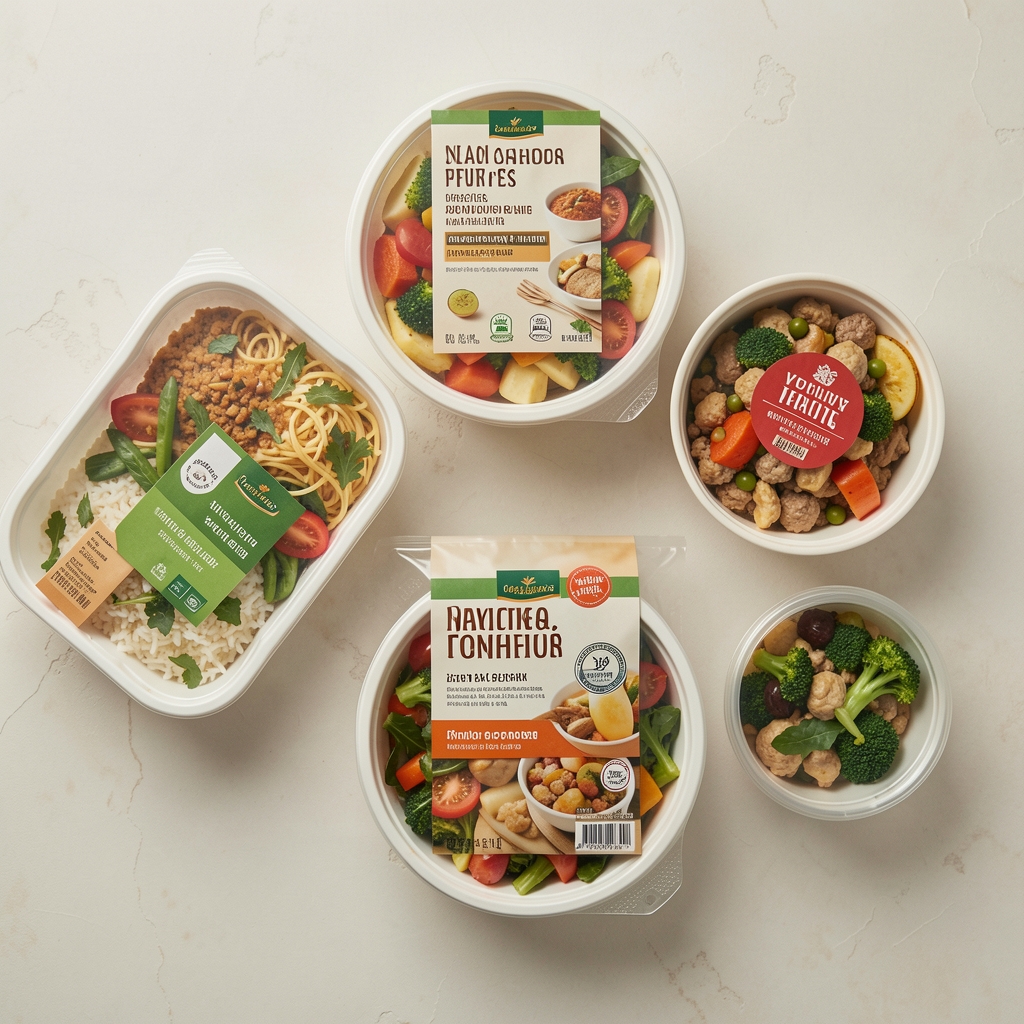
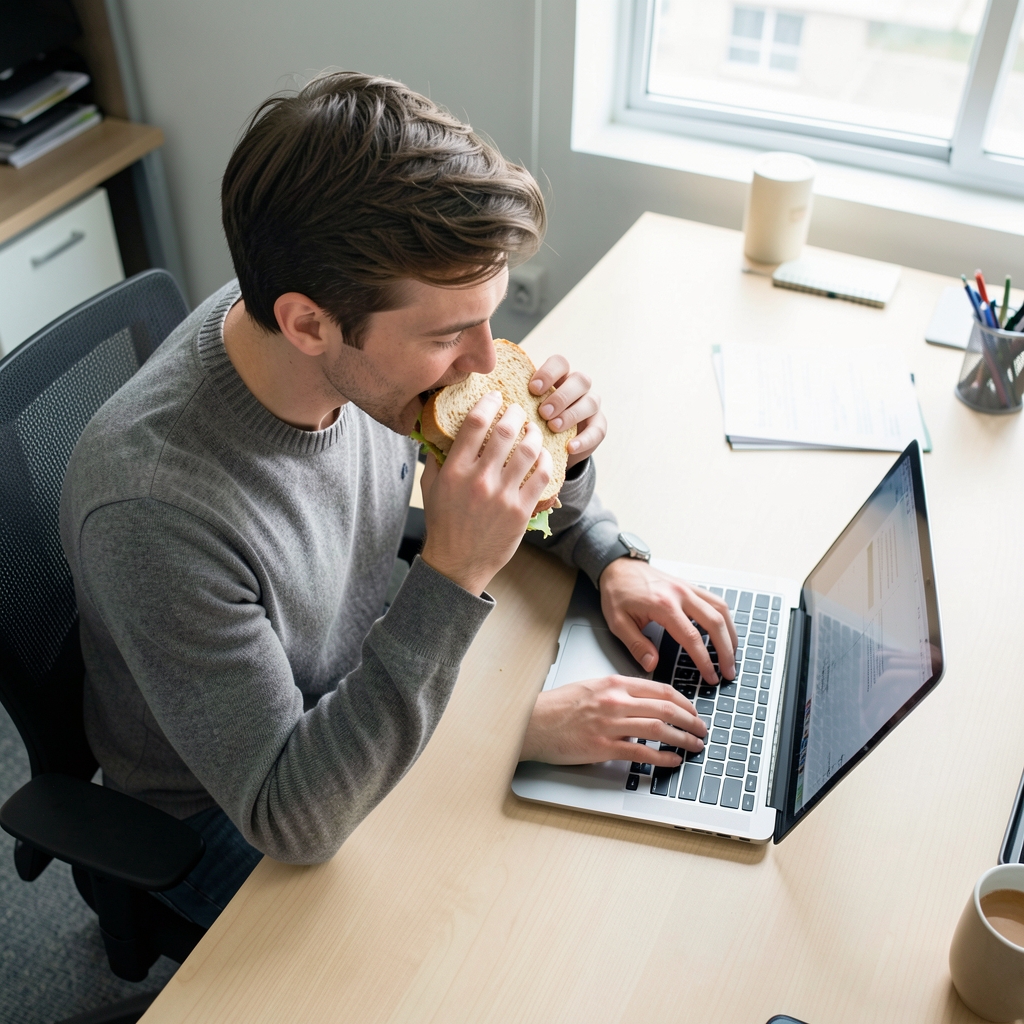
Research on food pace and satiety has suggested that meals consumed quickly and without attentiveness tend to produce a weaker sense of post-meal fullness than those consumed slowly and with attention. Ready-made meals, by their nature, are strongly associated with both these conditions: they are typically chosen under time pressure, consumed quickly (often directly from their packaging, in front of a screen), and eaten in an environment that competes with the meal for attention.
What the food behaviour literature calls "satiety signalling" — the process by which the body communicates that enough has been consumed — is not diminished by the ready-made format per se. The same food eaten slowly and with attention may well produce the same post-meal response as a longer, more considered preparation. What matters is not the product itself but the conditions of its consumption: the pace, the attention, the environment.
The convergence of convenience food choices and the eating conditions of the modern working evening — time pressure, competing screens, standing at a counter rather than sitting at a table — creates a set of circumstances in which the body's appetite feedback mechanisms operate at a disadvantage. Not because of the food, but because of the context.
During the observation period, two informal trials were conducted with a small group of willing participants — colleagues and acquaintances, not a research cohort. On separate evenings, each person ate the same ready-made meal in two different conditions: once standing, from the tray, in front of a running television; and once plated, at a table, without any screen present.
The differences reported were consistent and notable. In the plated, screen-free condition, participants reported eating more slowly, noticing the meal more, and feeling more satisfied afterwards — and three of five participants left a portion on the plate. In the standing, screen-present condition, all participants finished the full tray, and two reported wanting more afterwards despite having eaten an equivalent quantity of food.
This is not a controlled experiment. It is an observation. But it is an observation consistent with what published research in food behaviour and eating pace has documented at scale: that the context of a meal shapes the experience of eating it, and that the experience of eating shapes how much we feel we have consumed. The ready-made aisle is not the author of overeating patterns. The conditions in which its contents are consumed are a more significant part of that story.
Ready-made meal choices displace the portion decision to a pre-purchase moment, reducing appetite's role in shaping the size of the meal.
Convenience food selection in supermarkets is significantly faster than selection of fresh produce, reflecting a resolution of time pressure rather than a deliberate food choice.
The same ready-made meal eaten at a table, plated, without screens, produced greater reported satisfaction and less completion of the full portion than the same meal consumed standing from the tray with a screen present.
Convenience food and overeating patterns are less about the product than about the eating conditions — pace, attention, environment — in which the product is consumed.

Eleanor Marsden is the founding editor of Tarlena Almanac. She has spent over a decade writing about the relationship between time, environment, and food behaviour. She is based in London EC1.
More from this publication →